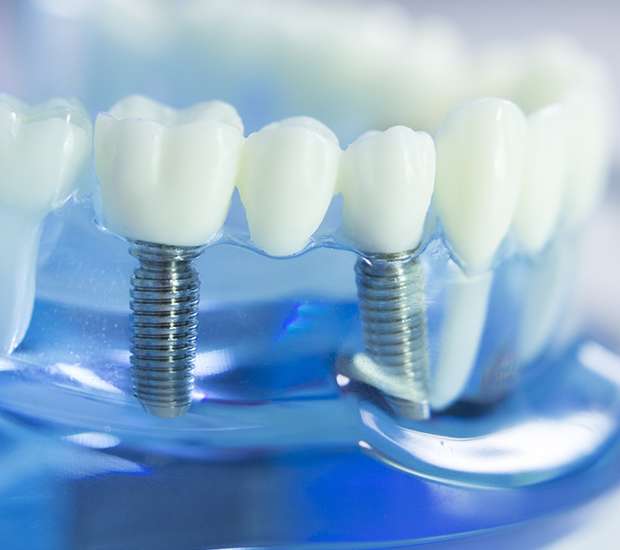
Precision Dental Implants with 3D Printing, CBCT & Digital Scanning Santa Clarita, CA
At White Crown Dental we deliver the highest level of accuracy in dental implant placement using a fully integrated digital workflow. By combining CBCT 3D imaging, 3D intraoral scanning, and 3D-printed surgical guides, our computer-guided implant surgery ensures implants are placed exactly where they are planned — often within fractions of a millimeter. This advanced technology minimizes risks, shortens treatment time, and provides predictable, long-lasting results for single teeth, multiple teeth, or full-arch restorations.
Dental implants can be beneficial for people who want a tooth replacement option that closely imitates natural teeth. They can be a very effective long-term solution for missing teeth. Dental implants are available at White Crown Dental in Santa Clarita and the surrounding area. Call our team at (661) 425-0008 to learn more about this service and set up an appointment.
How CBCT and 3D Intraoral Scanning Work Together
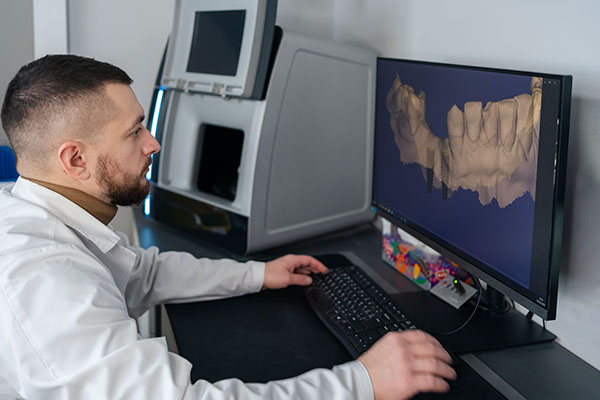 We start with a low-radiation CBCT scan that creates a detailed 3D view of your bone structure, nerves, sinuses, and vital anatomy. Next, our high-resolution 3D intraoral scanner captures precise digital impressions of your teeth and soft tissues — no messy putty trays required. These two datasets are merged in specialized planning software to create a virtual “digital patient.” This allows us to plan the ideal implant position, angle, and depth before surgery ever begins, ensuring perfect alignment with your future restoration.
3D-Printed Surgical Guides for Unmatched Accuracy
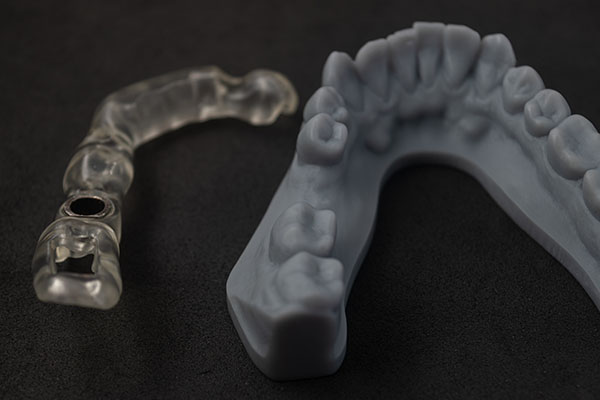 Once the plan is finalized, we design and 3D-print a custom rigid surgical guide that fits perfectly in your mouth. The guide contains precise sleeves that direct every drill and implant exactly according to the digital plan. This guided approach eliminates guesswork, resulting in far greater precision than traditional freehand methods. Studies show computer-guided placement typically achieves linear deviations under 1 mm and angular deviations around 2–3°, compared to 2+ mm and 6–7° with freehand surgery.
Clinical Advantages of Our Digital Implant Process
- Protects nerves, sinuses, and bone with pinpoint accuracy
- Enables minimally invasive (often flapless) surgery for less swelling and faster healing
- Reduces surgery time and the need for additional procedures
- Improves long-term success by optimizing implant position for ideal bite force and aesthetics
Patients in Santa Clarita trust White Crown Dental for implant dentistry because our CBCT-guided, 3D-printed process delivers confidence and comfort from planning through final restoration.
Ready for a smile that looks, feels, and functions naturally? Schedule your dental implant consultation today at White Crown Dental in Santa Clarita and discover the difference precision 3D technology can make. Call (661) 425-0008 or book online
— your new smile starts with perfect placement.
The Dental Implant Process
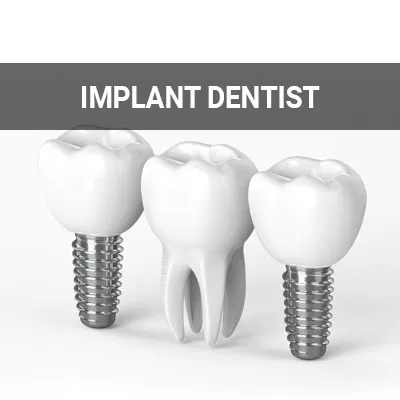
Dental implants act as artificial tooth roots to support new replacement teeth. During the procedure, an incision is made in the patient's gum to expose the bone where the implant will be placed. We will then insert the implant and suture the gum around the implant post. In some cases, a temporary denture is used instead of replacement teeth.
Following the surgery, the bone needs to heal around the dental implant. This process can take several weeks or months. Once it is sufficiently strong, a dentist can fit the permanent replacement teeth. According to the Mayo Clinic, some extra steps may be necessary. For patients with weak jawbones, a bone graft may be needed to ensure sufficient strength. After the bone has healed, an abutment connects a crown or dentures to the dental implant.
“Dental implants act as artificial tooth roots to support new replacement teeth.”
How To Care for Dental Implants
Caring for dental implants is very similar to caring for natural teeth, especially if the replacement teeth are permanent. Brushing, flossing, and rinsing with mouthwash is necessary for maintaining proper oral hygiene with implants. Getting regular checkups and teeth cleanings at the dentist are important for taking care of replacement teeth.
Dental implants may require extra cleaning to keep them in optimal condition. Removable, implant-supported dentures should be taken out at night and soaked in a denture solution. Patients can also use an oral irrigator to help clean below and around the dental implants.
“Caring for dental implants is very similar to caring for natural teeth, especially if the replacement teeth are permanent.”
What To Expect After the Procedure
Following the procedure, it is common to have swelling and discomfort around the implantation site. Some patients may experience minor bleeding and bruising of the skin and gums in the treatment area. These side effects can be managed with pain medication and antibiotics if necessary. Patients can expect such side effects to subside after a few days.
After receiving dental implants, it is best to stick to eating soft foods while the bone heals. Most dental implant procedures use dissolvable stitches, so patients will not have to come back to get them removed. These stitches will usually fall out within seven to 10 days. Following the aftercare instructions and advice will help the healing process.
“Following the procedure, it is common to have swelling and discomfort around the implantation site.”
Check out what others are saying about our dental services on Yelp: Dental Implants in Santa Clarita, CA
Benefits of Dental Implants
Dental implants can be a good choice for many patients with missing teeth. Dental implants allow new teeth to feel, look, and function naturally. Here are some key benefits of dental implants:
- Comfortable: Dental implants act as tooth roots and stay firmly in place. This firm foundation makes them more comfortable than dentures and other replacement tooth options. Many patients report that implants feel similar to their natural teeth.
- Functional: The stability of implants makes them effective for eating, talking, and cleaning. They function similarly to the teeth they are replacing. Less permanent options may interfere more with daily life.
- Permanent: Dental implants are one of the most permanent tooth replacement options. They can last a lifetime with good care. Additionally, fixed replacement teeth on implants do not need to be removed every day for cleaning.
- Natural-looking: Implant-supported replacement teeth look like natural teeth. The visible part of the dental implant is a cosmetic crown made from a composite material that is color-matched to the patient’s tooth enamel. It can be hard to tell the difference. Many patients enjoy dental implants’ aesthetic appeal, as others cannot tell the difference between the replacement and natural teeth.
“Dental implants allow new teeth to feel, look, and function naturally.”
Questions Answered on This Page
Q. What happens during the dental implant process?
Q. How to take care of dental implants?
Q. What happens after the dental implant procedure?
Q. What are the benefits of dental implants?
People Also Ask
Q. What is the most durable option for replacing missing teeth?
Q. What can I expect the day of the implant procedure?
Q. What does the implant recovery process look like?
Frequently Asked Questions
Q. How do I know if I am a candidate for dental implants?
A. According to WebMD, most healthy people are good candidates for dental implants. However, weak or unsubstantial jawbone mass may limit whether a patient can receive implants. Restorative procedures like bone grafting can overcome this issue in some cases. A dentist can determine whether a patient is a candidate during an exam and consultation.
Q. What is the success rate of dental implants?
A. According to the Cleveland Clinic, dental implants have a success rate of up to 97%. Furthermore, they can last a lifetime with proper care. Dental implants are one of the most permanent solutions for missing teeth.
Q. How much do dental implants cost?
A. The cost of dental implants will vary depending on the patient's needs, bone quantity, and the treatment area. Dental implants may qualify for some insurance coverage, but situations will vary. People interested in receiving this procedure should contact their insurance provider and receive a consultation to learn more about the cost.
Q. Are dental implants removable?
A. The dental implant is permanent. The replacement teeth that sit on them can be fixed or removable. Fixed dentures are the preferred option for many patients due to their stability and comfort.
Q. Do I need full dentures to get implants?
A. No, implants may support one or more replacement teeth. Some patients receive partial dentures with multiple teeth, while others receive a full arch of teeth. Dental implants are a flexible solution for each patient's needs.

Scan here to view this page, Dental Implants, on mobile
Dental Implant Terminology
Call Us To Learn More About Dental Implants
Dental implants closely imitate the form and function of natural teeth. If you are missing teeth, this may be the solution for you. Call (661) 425-0008 to set up an appointment at White Crown Dental and learn more about this procedure.
Helpful Related Links
- American Dental Association (ADA). Glossary of Dental Clinical Terms. 2024
- American Academy of Cosmetic Dentistry (AACD). Home Page. 2024
- WebMD. WebMD’s Oral Care Guide. 2024
About our business, license, and website security
- White Crown Dental was established in 2017.
- We accept the following payment methods: Cash, CareCredit, Check, Discover, MasterCard, and Visa
- We serve patients from the following counties: Los Angeles County
- We serve patients from the following cities: Santa Clarita, Newhall, Valencia, Saugus, Stevenson Ranch, Canyon Country, Castaic, Agua Dulce, Sylmar and San Fernando
- CA (License #62498). View License Information and Specifics
- National Provider Identifier Database (1184065971). View NPI Registry Information
- Healthgrades. View Background Information and Reviews
- Norton Safe Web. View Details
- Trend Micro Site Safety Center. View Details

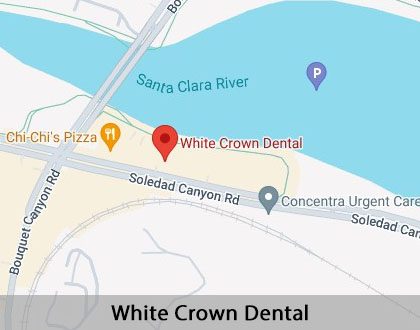
Scan here to open directions to White Crown Dental on mobile
Back to top of Dental Implants
Related Posts
Maintaining Oral Health After A Dental Implant Procedure
Dental implants are excellent options for restoring dental function and aesthetics in patients with missing teeth. However, the process does not end after the implant placement. The long-term condition of your mouth determines the success of the treatment. If you want to maintain good oral health and thus, your implants, this article explores a few…
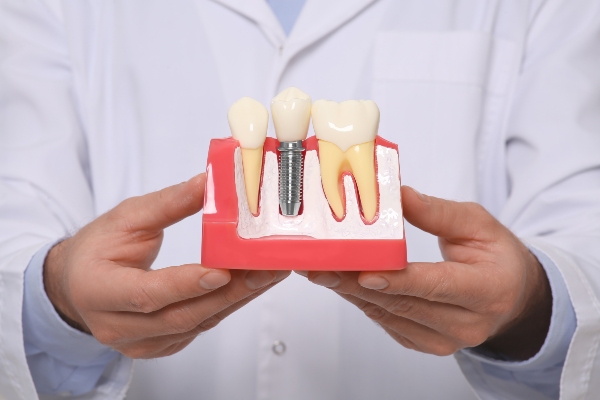
How Long Do Dental Implants Last?
Dental implants are stable structures that can replace missing teeth. They consist of durable, biocompatible materials. Knowing why these restorations last for a long time can motivate you to invest in your dental health. Here are the details on how long dental implants can serve you.Dental implants fuse with the jawbone and gum tissue. The…
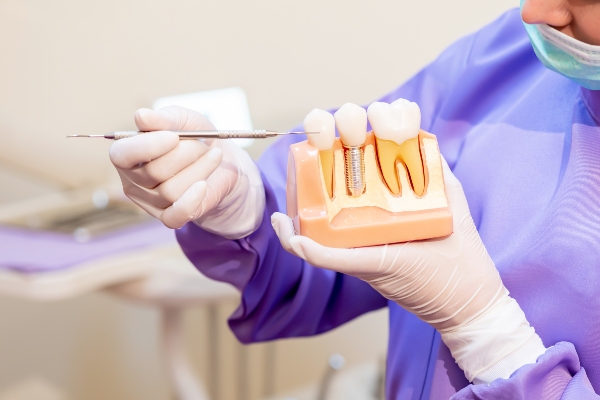
The Potential Risks Of Getting Dental Implants
For many individuals with missing teeth, dental implants are an effective way to restore the appearance and function of their smile. However, like any medical procedure, there are potential risks and complications associated with getting dental implants. While these risks are relatively rare, it is important for patients to be aware of them before undergoing…

The Benefits Of Dental Implants For Your Oral Health
Missing one tooth or multiple teeth can make it harder to perform everyday functions. It can also make you feel self-conscious about smiling. Dental implants not only restore the function and appearance of your smile, but they also help restore your everyday oral health.Dental implants are artificial tooth roots surgically placed in a person's jawbone.…
Explore additional topics covered on our website:
Call Us Today

Scan here to call White Crown Dental on mobile